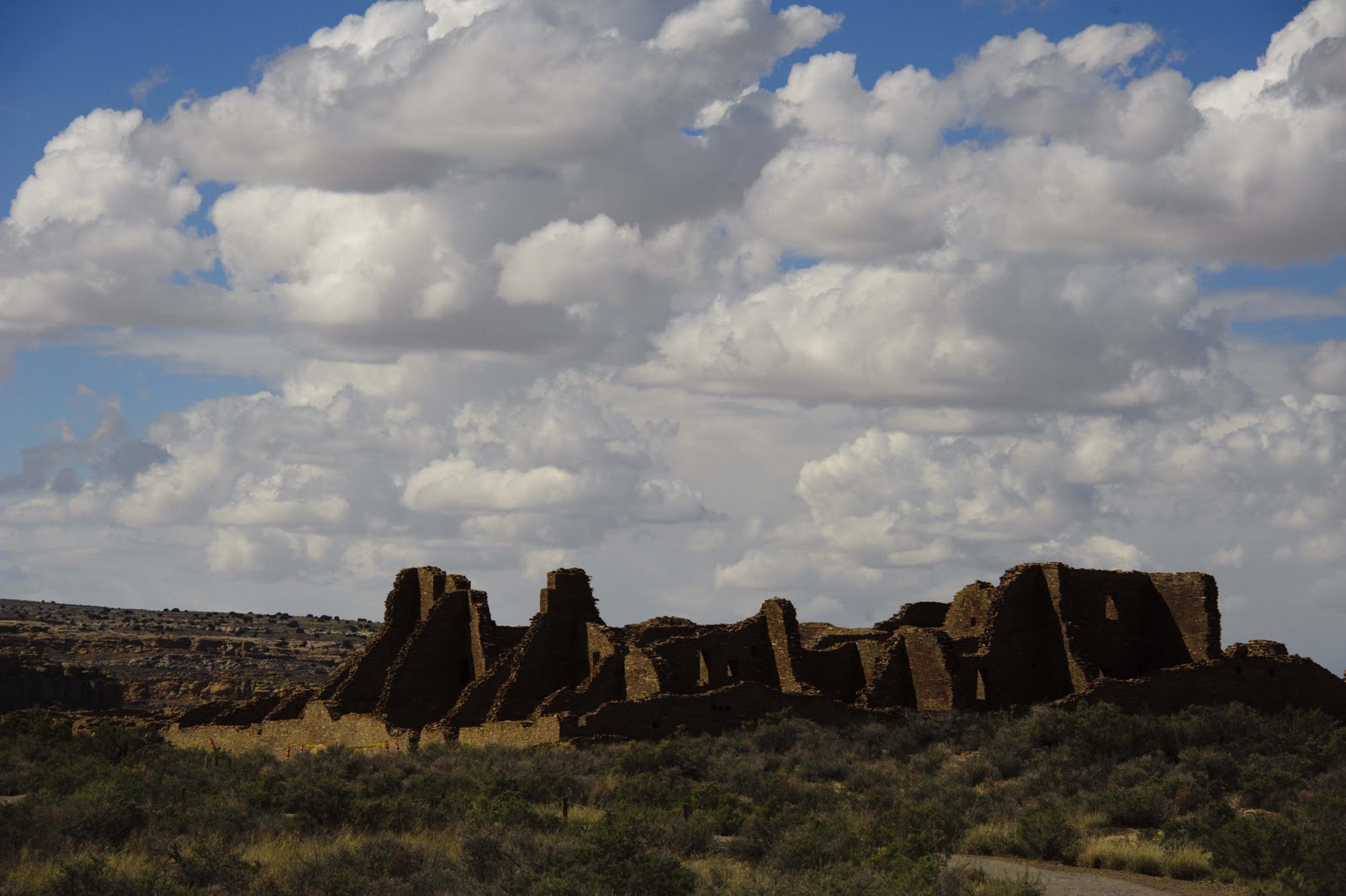
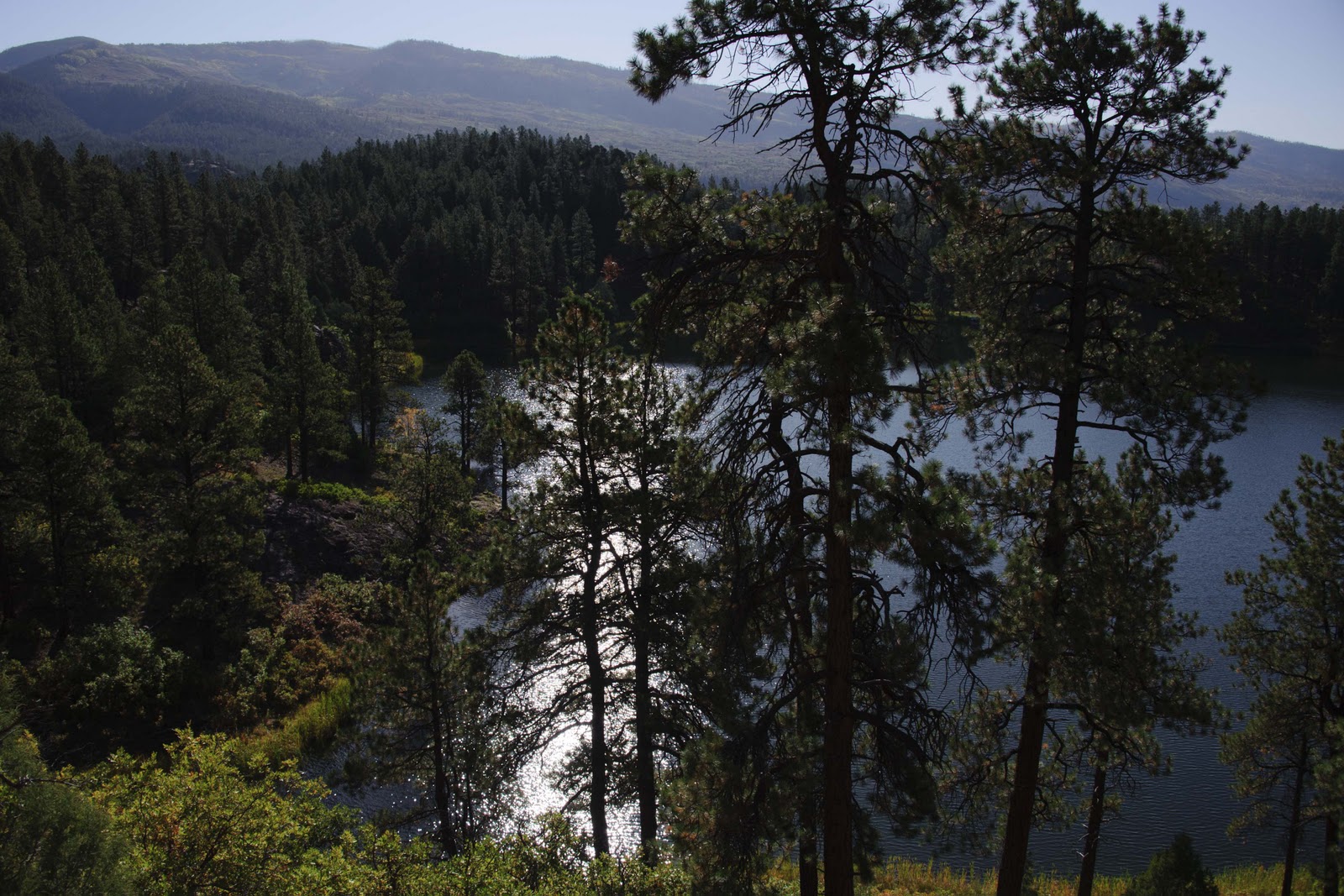
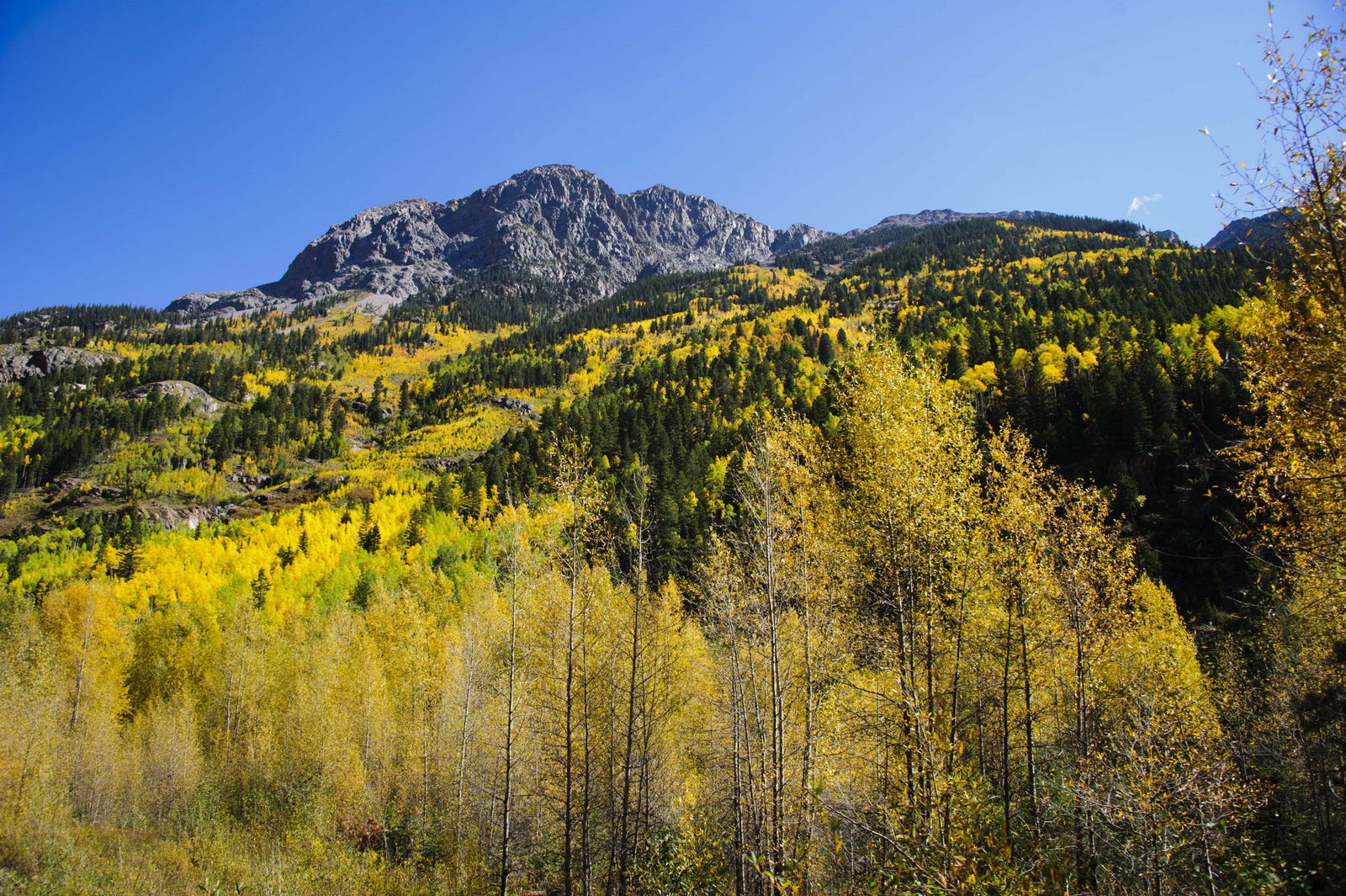
What a FUN round of golf! No wonder The Hideout in Monticello is such a highly rated Muni course in Utah - it is fun to play, it is incredibly well maintained and the views are beautiful -
 |
| The mechanical man attempts a round of golf with dismal results. |
After this wonderful morning, we packed up, said good-bye to our little cat friend and were ready to tackle our LOOOOONG drive of 70 miles to Mesa Verde and our new ‘camping’ spot - which is really peaceful -
 |
| A great spot just outside Mesa Verde National Park. |
 |
| A storm squall rolls into our neighborhood. |
For the past several days we have been traveling “The Trail of the Ancients” (apropos, don’t you think???) and will continue along the Trail to Albuquerque.
 |
| No, not my trail..the trail of the Ancestral Puebloans. |
This Trail encompasses sites in the Four Corners region that ‘exemplify’ the Native People who inhabited the area since about 200 BC and their ‘homes’ and communities. Some of the sites included on this trail which we have already written about include the Edge of the Cedars State Park Museum and Pueblo and Natural Bridges National Monument (NM).
Since arriving at Mesa Verde we have traveled the Trail to see the Anasazi Heritage Center, the Escalante ruins, the Lowry Pueblo NM in Canyons of the Ancients NM, Hovenweep NM and Mesa Verde NP. We are overwhelmed with the sites and history - and could write volumes on what we have seen. It is interesting to have a little of the background on each of these sites - so I will try to give some information BUT keep it short?!?!? Gary’s pictures will also tell the tale.
The Anasazi Heritage Center and the Escalante Ruins - The Anasazi Heritage Center was an outgrowth of the largest archaeological research project ever carried out in the US. This work began after 1968, when the federal government authorized the damming of a river. The required environmental impact study resulted in archaeologists finding more than 1,600 sites! The Escalante ruins, a 20-room pueblo built around 1129 A.D. and occupied, except for two short periods, until the early 1200’s, were excavated and stabilized as part of this study to become part of the Center.
 |
| A view of the Escalante Pueblo outside Cortez, CO. |
Back to the Anasazi in a minute - but on a lighter note - a fund raising project by the San Juan Mountains Assoc. had artists ‘decorate’ pumas for Public Art for Public Lands. This puma was done in the ‘style’ of the Puebloans of black on white and resided in front of the Center. I loved him and wanted to share -
 |
| Puma On Parade at the Anasazi Cultural Center. |
Now, back to the Anasazi. Although the pueblo above was built in the early 1100’s, the Anasazi (a Navajo term given archaeologists, referring to the former inhabitants of abandoned cliff dwellings and pueblos), or ‘Pueblo ancestors’ (the two terms are now used interchangeably), emerged more than two millennia ago from a seminomadic hunter-gatherer tradition to practice agriculture and live in villages. From about 5,500 B.C. to 500 A.D., small scattered bands or family groups roamed the Southwest hunting small game and collecting edible plants, seeds, nuts and fruit. The acquisition of corn from southern Mexico shifted these people from nomadism to agriculture and was the genesis of the Anasazi culture.
As they progressed from a hunting society to an agricultural one, their architectural skills also changed as they became more tied to the land. They advanced from sheltering themselves in shallow pithouses under rock overhangs to building multistoried masonry pueblos.
Because of the many finely woven baskets found at their pithouse sites, the first Anasazi are referred to as Basketmakers. By 700 A.D. these early farmers were building above-ground attached masonry dwellings, or pueblos. Then the term Basketmaker is dropped in favor of Pueblo. SO -
Lowry Pueblo, part of Canyons of the Ancients NM - The Ancestral Puebloan people constructed this Pueblo around 1060 A.D. and inhabited it for about 165 years. Lowry began as a small village with a few rooms and a kiva. By the time the last families left Lowry and migrated to the south, the pueblo had grown to 40 rooms, eight kivas, and a Great Kiva. Access here was wonderful as we were able to walk the perimeter and enter several rooms.
 |
| The Lowry Pueblo. |
The Kiva was a very important part of the life of the Ancestral Puebloan. It was a central gathering place for the family, storytelling and religious activities. It was always circular, below ground, had a place for a fire in the center and was entered through a hole in the roof via a ladder. (The ruins no longer have the roof in place - on occasion the roof has been replicated.) It appeared that each family would have a Kiva and there might be a larger one for the community. The picture below shows the Great Kiva of the Lowry Pueblo, which probably drew Ancestral Puebloans from several hundred square miles to conduct religious ceremonies. An interpretive sign quoted a Hopi woman who recently visited the site as saying that the two rock designs in the floor of the Kiva were the images of Summer and Winter. If you look at the rocks they do have the character of human figures.
 |
| The Great Kiva at the Lowry Pueblo. |
Hovenweep NM - Here at Hovenweep (which means ‘deserted valley’ in the Ute language) most of the buildings still standing were constructed from 1230 to 1275 by the Ancestral Puebloan and are referred to as the Square Tower group. The stunning Square Tower and an intriguing collection of buildings are clustered along the rim of Little Ruin Canyon. Here we were able to walk the entire rim to view the sites.
 |
| The Twin Towers |
 |
| Hovenweep Castle |
 |
| Several of the Hovenweep Towers nestled around the canyon. Square Tower sits down in the canyon. |
Mesa Verde - The real jewel in the crown of the Trail (at least so far). Cited as one of the world’s top cultural attractions, Mesa Verde was home to the Ancestral Puebloans for more than 700 years! Complete homes and entire villages have survived with many artifacts amazingly intact, providing a unique and thought provoking glimpse into America’s pre-European past. The cliff houses set in rock alcoves or tucked in cracks in the canyon walls do give a feeling of fantasy - a Disneyland of American archaeology!
Although hunter-gatherers certainly roamed these canyons for thousands of years, Mesa Verde was not permanently settled until around 600 A.D. At this time, numerous pithouse villages were home to extended families. By 750 A.D. they had begun building surface rooms of upright posts woven through with slender branches to form walls that were coated with mud. While cool in the summer, these structures provided inadequate protection from the sharp winds and deep snows of Colorado winters. So - small contiguous masonry rooms eventually took their place as living quarters. Mesa Verdeans lived in pueblos on top of the mesas until around 1200 A.D. when many people moved into the canyons to live in the cliff dwellings. By the mid-1200’s, these cliff dwellings housed about half the population of the Mesa. By 1300 these pueblos were vacant! The reason for the exodus is a mystery - but believed to be because after such a long habitation the natural resources were depleted AND a prolonged drought reeked havoc with the agricultural society (global warming in the 1300’s!!). One has the opportunity to see the full range of this historical period - from pithouses of 600 A.D. to cliff pueblos of 1300’s - here at Mesa Verde. Some - up close and personal!

 |
| Dwellings built in the alcoves along Mesa Top. |
 |
| Sunset House. |
 |
| A distant view of Cliff Palace-the largest cliff dwelling in the Southwest! |
 |
| Getting closer. |
 |
| Almost there. |
 |
| More than 100 Puebloans occupied Cliff Palace. |
 |
| Amazing to see this from such a close proximity. |
As you can see, by the 1300’s the Kiva has advanced to a much more ‘finished’ ceremonial room. Now an air ‘intake’ is included to bring fresh air into the Kiva. However, to prevent the rush of air from blowing the fire out or blowing the ash around the floor of the Kiva, a rock panel is placed in front of the intake entrance. The fire pit is still in the middle of the room. In this picture, the ‘sipapu’ is also easily seen. This is the little round hole in the floor directly below the fire pit. Remember the bridge of the same name at Natural Bridges?? This is the ‘entrance’ by which the ancestors spirits are able to come and go. One can also see the benches and pilasters that held up the roofs. These Kivas were still covered with a roof, which had the entrance ‘hole’ using a ladder. However, these roofs have not endured the test of time;-(
 |
| Note the air intake hole at the rear of this Kiva. |
 |
| We had to climb several of these ladders to get back out of the canyon from Cliff Palace. |
Spruce Tree House, our next destination, is the third largest cliff dwelling among several hundred within park boundaries and was constructed between 1200 and 1276 by the Anasazi. This dwelling contains about 114 rooms and eight kivas and housed about 100 people. Again, one can actually hike to the dwelling and climb amongst the ruins;-)
 |
| Now we are headed down to explore the Spruce Tree House. |
 |
Three story apartments at the back of this section of Spruce Tree House.
(Notice ladder down into the covered Kiva.) |
 |
| The ladders lead down to Kivas. |
 |
The round structure below ground level is a Kiva without its roof.
Look at the red and white 'paint' on the upper back wall.
|
These last several days have been awe-inspiring. Makes one wonder - why do we talk about history of thousands of years ago only existing in Europe?? As in the Coliseum, Parthenon, etc?? There are wonderful, amazing, overwhelming and ageless sites in our own back yard!! AND - our Federal Government has done the National Park system right. Just hope funding isn’t cut here too;-(
Well - hope the narrative hasn’t been too boring, but maybe a little helpful. AND - hope the pictures have given some feel of what we have been able to experience the last few days. AND - there is more of the Trail to come with a little Balloon Festival in between. But, now we have to pack up for another LOOOONG moving day - 36 miles!!
So - have a great week-end and we will talk to you again soon.
Overwhelmed - E & G from the Trail of the Ancients